Bengal Edge Global

The second shipment has to match the first.

Almost nobody gets burned on the sample. The sample is always good. People get burned on the third shipment, when the sorter changed and nobody mentioned it. Here is how we stop that happening to you.

01

The golden sample system

A physical reference bundle, approved by you, that every future batch is measured against.

  1. You receive a sample

    Sent by courier against your spec. Assess it on your own bench, with your own standards.

  2. You approve it as the reference

    Once approved, that bundle becomes the golden sample. We hold a sealed identical counterpart here with the batch reference recorded.

  3. Every bulk lot is checked against it

    Before dispatch, hair from the actual lot is compared to the held sample for draw level, cuticle direction, weight per bundle, tip taper and shade.

  4. Off-spec means we tell you, not ship it

    If a lot does not match, you hear about it before it leaves. You then choose: wait for the next lot, or accept the variance at an adjusted price.

  5. The reference is re-set only by agreement

    If your requirement changes, we approve a new golden sample together and retire the old one.
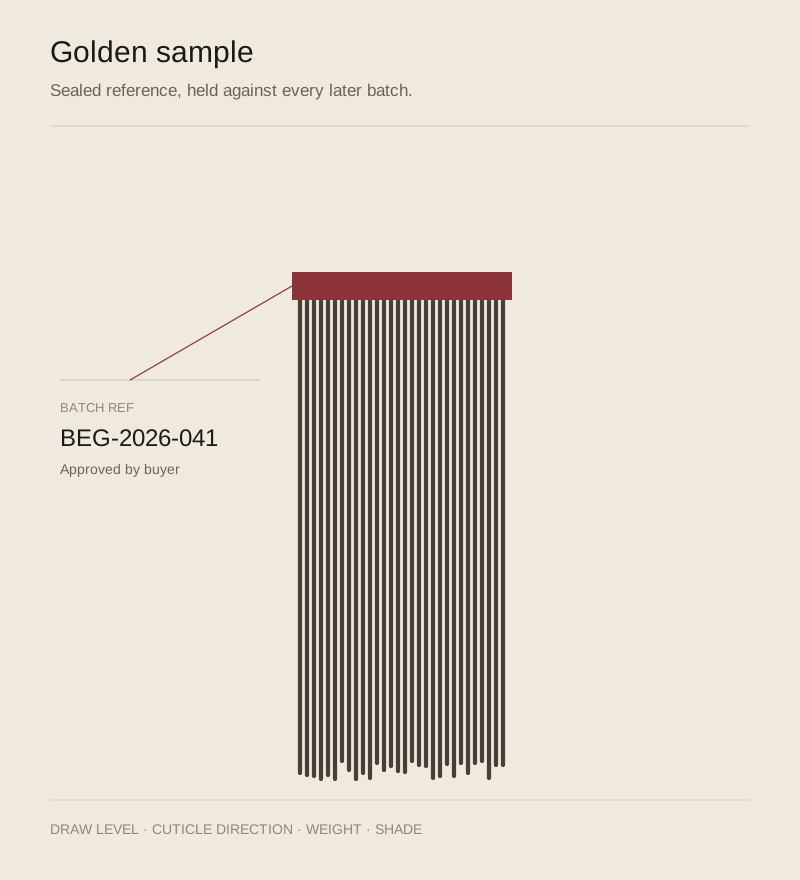
Sealed and labelled golden sample reference bundle
02

Where the hair comes from

We work on the edge of the cluster that produces most of India’s processed hair. That is the whole basis of this business.

Hair reaches sorters across Murshidabad and Purba Medinipur as unworked bulk. Sorting labour buys it by the lot, then separates it by length, removes the short waste, cleans it and works it into usable bundles. A sizeable share of any raw lot is under 8 inch and gets discarded — which is exactly why long lengths cost what they cost.

We buy at that stage, from the sorters, in person. No trader chain in between. When a buyer asks us why a 28 inch quote sits where it does, we can answer from the actual lot economics rather than from a price list someone handed us.

Double drawn conversion we do ourselves, so the draw standard is controlled rather than outsourced and hoped for.

Checked on every lot

Cuticle direction, draw level, length accuracy against the stated inch, bundle weight, shed and tangle after a wash test, moisture and smell.

Recorded on every lot

Batch reference, sorter source, length breakup, gross and net weight. The reference goes on your packing list, so a complaint can be traced to a specific lot.

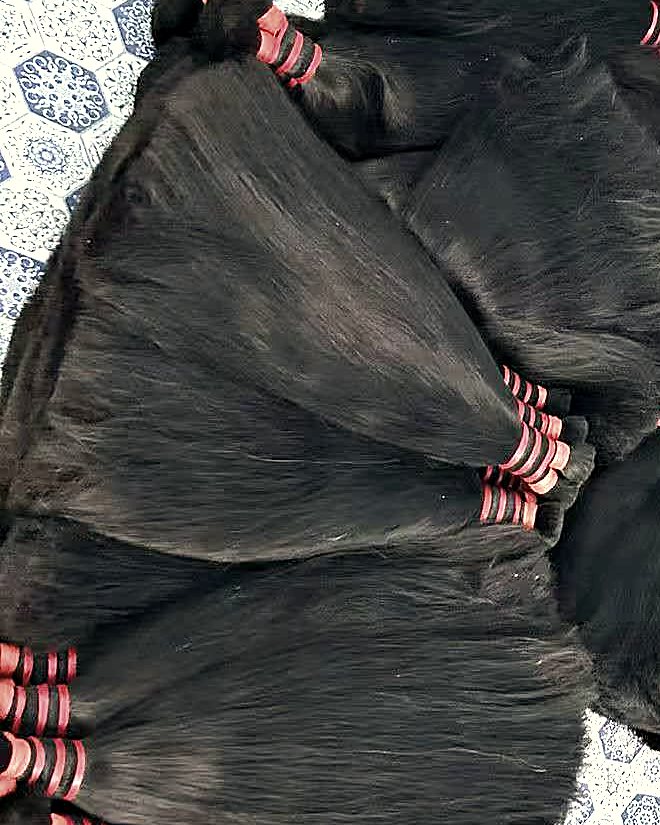
Sorted bundles of Indian human hair laid out by length
Sorted stock, photographed as it sits. This is a working lot before it is drawn, wefted or packed. Our own hair, our own photograph — not a stock image.
03

The cluster we buy from

Hair processing in West Bengal is not a factory industry. Understanding how it actually works tells you what to expect from any supplier here, including us.

Collection starts with hawkers who buy household comb waste village to village. Around two lakh of them work across India. That hair reaches sorting units in Murshidabad and Purba Medinipur, mostly cottage-level operations run by women, where it is untangled, washed, graded by length and worked into usable bundles by hand.

A large share of any raw lot is short waste and gets discarded. What survives is sorted into length bands, and the long bands are where the value sits. This is the entire reason a 28 inch quote looks the way it does.

Temple hair, the Remy grade, comes through a different channel — collected with the cuticle aligned and auctioned, largely from the south. Household-collected hair is non-Remy and is what West Bengal principally works with. Both are real products. Anyone selling you temple-grade Remy at non-Remy prices is selling you something else.

What this means for your order

Volume is real but it is assembled, not stamped out. A 100 kg order is many sorters’ output pooled and then checked to one standard. Lead times reflect that. A supplier promising instant bulk at any length is either holding old stock or blending.

Raw material is tightening

Raw hair is being exported to Bangladesh and Myanmar for processing, and Indian sorting units are short. Procurement costs have risen sharply in recent years. We quote against current lot cost and we will show you the working.

See it yourself

We will video call you from the sorting unit before your lot is packed, and we host buyers who want to visit the cluster in person. Kolkata airport is roughly four hours away.

04

If something is wrong

Raise it with photographs and the batch reference from the packing list within 10 days of delivery. We check it against the held golden sample and the retained lot record.

Where the fault is ours, we replace the affected weight on your next shipment or credit it. We are not going to argue you into keeping hair you cannot sell. One lot is worth far less to us than a buyer who comes back.

Start with a sample.

Tell us the grade and lengths you want to assess. Sample cost is adjusted against your first bulk order.

WhatsApp